
Writers have almost never been employees. The novelist, the magazine freelancer, the technical author — each takes a commission, delivers work, and moves on. No collective bargaining unit follows from that relationship, no shop floor to organise, no employer to negotiate with in any conventional sense. Two American organisations tried anyway, decades apart, and built structures that remain the baseline models for everyone who came after.
The Authors Guild, founded in 1912, began as the Authors League of America and incorporated the professional writers who sold to publishers and magazines at a moment when copyright law was still being argued from first principles. Its founding logic was trade association as much as union: set contract standards, defend copyright, litigate on behalf of members. It does not bargain collectively — that would require a defined employer — but it publishes model book contracts, intervenes in copyright disputes, and has served as plaintiff in major infringement cases. Membership is individual and credential-based, open to published authors meeting defined output thresholds.
The National Writers Union arrived in 1981 with a different theory. Affiliated with the United Auto Workers and part of the AFL-CIO, it extended union infrastructure — grievance procedures, contract campaign tools, rate cards — to freelancers in journalism, technical writing, and book authorship. Where the Authors Guild focuses on writers of books and long-form work, the NWU has historically organised across the whole print-and-digital spectrum, with particular attention to magazine and online journalists whose per-piece rates have declined steadily since the mid-1990s. The NWU's Freelance Solidarity Project, launched in 2019, specifically targets digital media.
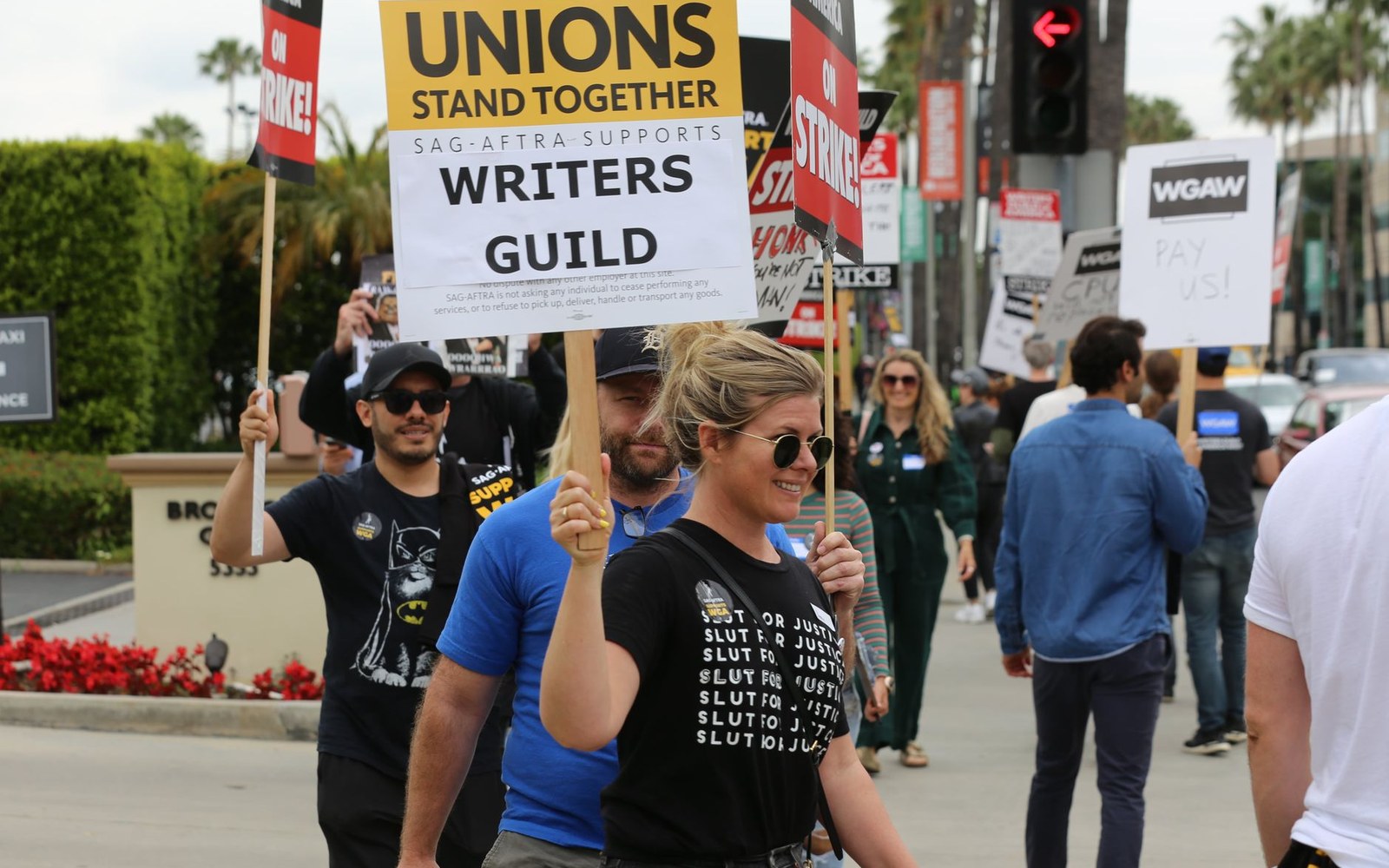
The contrast between them captures a durable argument: whether the appropriate model for non-employee workers is a professional association setting standards from above or a union building power from below. The Authors Guild has run legal campaigns; the NWU has run contract strikes. Both have found that without the lever of a recognised employment relationship, enforcement depends on public pressure, litigation, or the willingness of publishers to accept voluntary norms.
That structural limit is precisely what newer organisations — the Independent Workers' Union of Great Britain among them — encountered when they extended the same logic to platform workers. The tools the Authors Guild and the NWU refined over a century are borrowed, adapted, and sometimes found wanting, but they remain the point of departure for anyone trying to organise work that the law has never quite decided is work.

Elsewhere in Organising