The Craft Marketplace That Became a Public Company
How a Brooklyn craft site turned its sellers into a balance sheet — and what happened when they noticed.

From Flatbush to Nasdaq
Etsy was incorporated in 2005 by Rob Kalin, Chris Maguire, and Haim Schoppik, operating initially out of a Brooklyn apartment. The premise was narrow: a marketplace where independent makers could sell handmade or vintage goods directly to buyers. By the time it filed its IPO prospectus with the SEC in March 2015, it reported 1.4 million active sellers and gross merchandise sales of approximately $1.93 billion for 2014. It listed on the Nasdaq on 16 April 2015 at $16 per share, raising around $267 million; the stock closed its first day above $30.
What the prospectus also disclosed, without quite naming it in those terms, was the structural position of every seller: self-employed, bearing their own production costs, subject to Etsy's fee schedule, and with no contractual guarantee of continued access to the platform. The relationship was unambiguous as a commercial one, not an employment one — but sellers depended on Etsy's search algorithm, payment infrastructure, and brand in ways that parallel the dependencies courts have treated as indicative of control in other platform contexts.
When Fees Rose, Sellers Organised
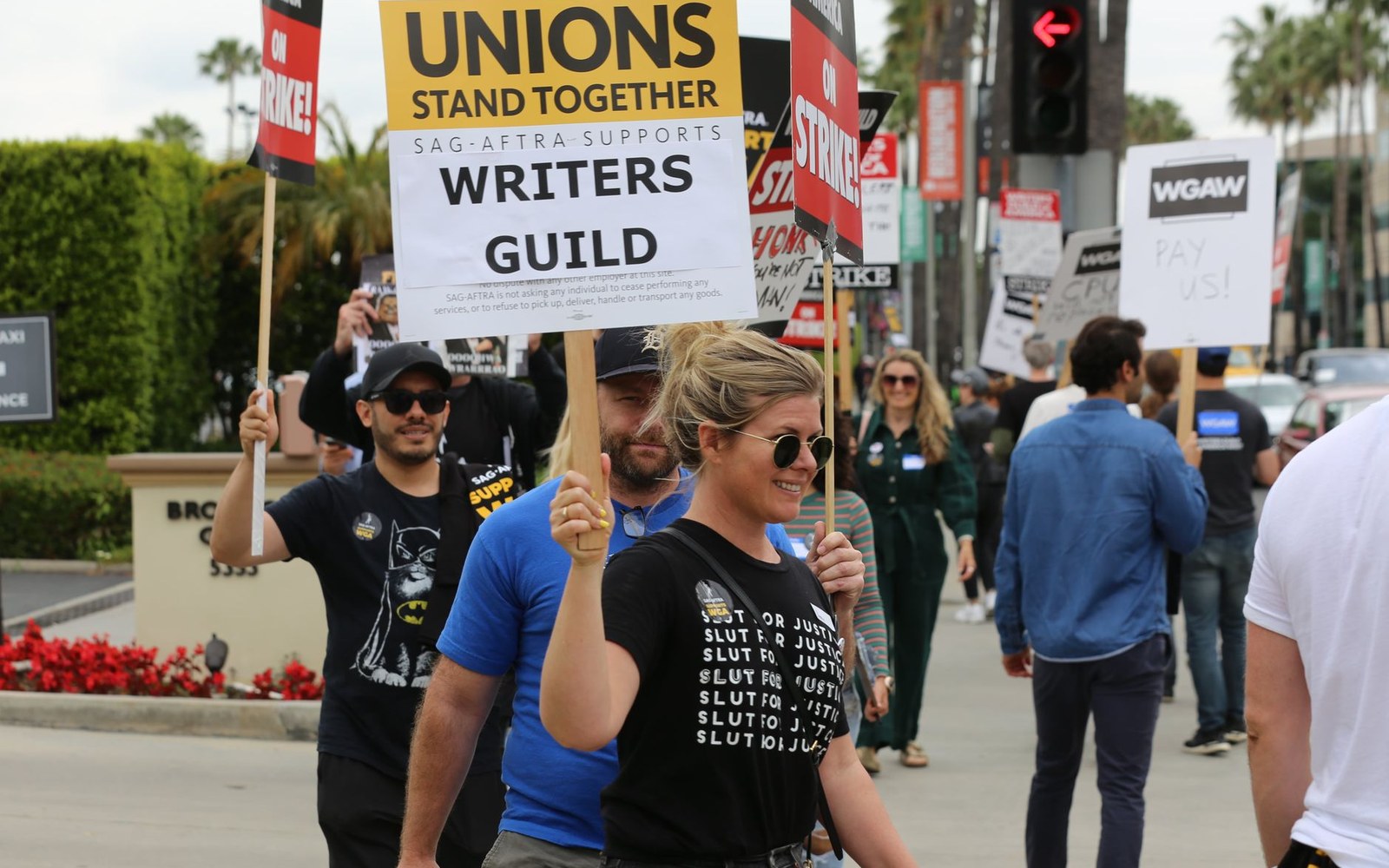
Etsy raised its transaction fee from 3.5 percent to 5 percent in 2018 — its first increase in a decade — and added further fee revisions in subsequent years, including a payments processing structure disclosed in annual 10-K filings. The response from parts of the seller community in 2022 was a coordinated sales strike — sellers placing their shops in "vacation mode" for a week to protest fee levels and advertising costs. The organisers circulated an open petition that drew more than seventy thousand signatures.

No court characterised Etsy sellers as workers or employees, and the strike had no legal mechanism behind it: sellers had no collective-bargaining rights and no recognised representative body. What the episode illustrated, compactly, was the same asymmetry visible in larger platform-labour disputes — the platform sets terms unilaterally; the workers, if workers they are, have no formal channel but exit or noise.
Etsy's 2014 annual report recorded operating losses; its 2022 10-K showed revenue of approximately $2.57 billion. The sellers who generated that revenue remained, in every legal sense, on their own.
Elsewhere in The Trade