The Guilds Had This Argument in the 1930s
Entertainment unions invented collective bargaining for independent contractors long before Uber existed. The gig economy is still borrowing their playbook.

The Problem the Guilds Solved First
When a studio hired a screenwriter in 1933, that writer was, by every legal measure, an independent contractor — engaged per project, with no guarantee of further work, no employer in the conventional sense. The same was true of actors. The studios understood this perfectly well and used it to suppress wages, extend hours, and deny credit. The Screen Actors Guild, chartered in 1933, and the Screen Writers Guild, predecessor to the Writers Guild of America, set out to solve a problem that labour law had not yet named: how do you bargain collectively for workers who are, structurally, never employees?
The answer they built had three components. First, the franchise system: unions would certify only those talent agents who agreed to operate within guild-approved terms, cutting off the intermediaries who competed wages down. Second, the minimum basic agreement (MBA): a floor of pay, credit, and working conditions negotiated directly with the studios and renewed periodically, binding on signatories regardless of the individual deal struck above it. Third — and most consequential — the residuals formula, by which writers and performers receive payments each time their work is re-broadcast, licensed, or streamed. Residuals converted a one-off project fee into something resembling ongoing income from a single engagement.
What the Model Established
The residuals formula, first negotiated in earnest in the early television era of the 1950s, was built on an insight that contemporary platform-economy theorists have only recently articulated: where the worker cannot control reuse of their output, the contract must compensate for it. SAG-AFTRA and the Writers Guild of America did not use the vocabulary of algorithmic management or platform dependency, but the underlying problem — asymmetric power over how labour is redeployed — was identical.
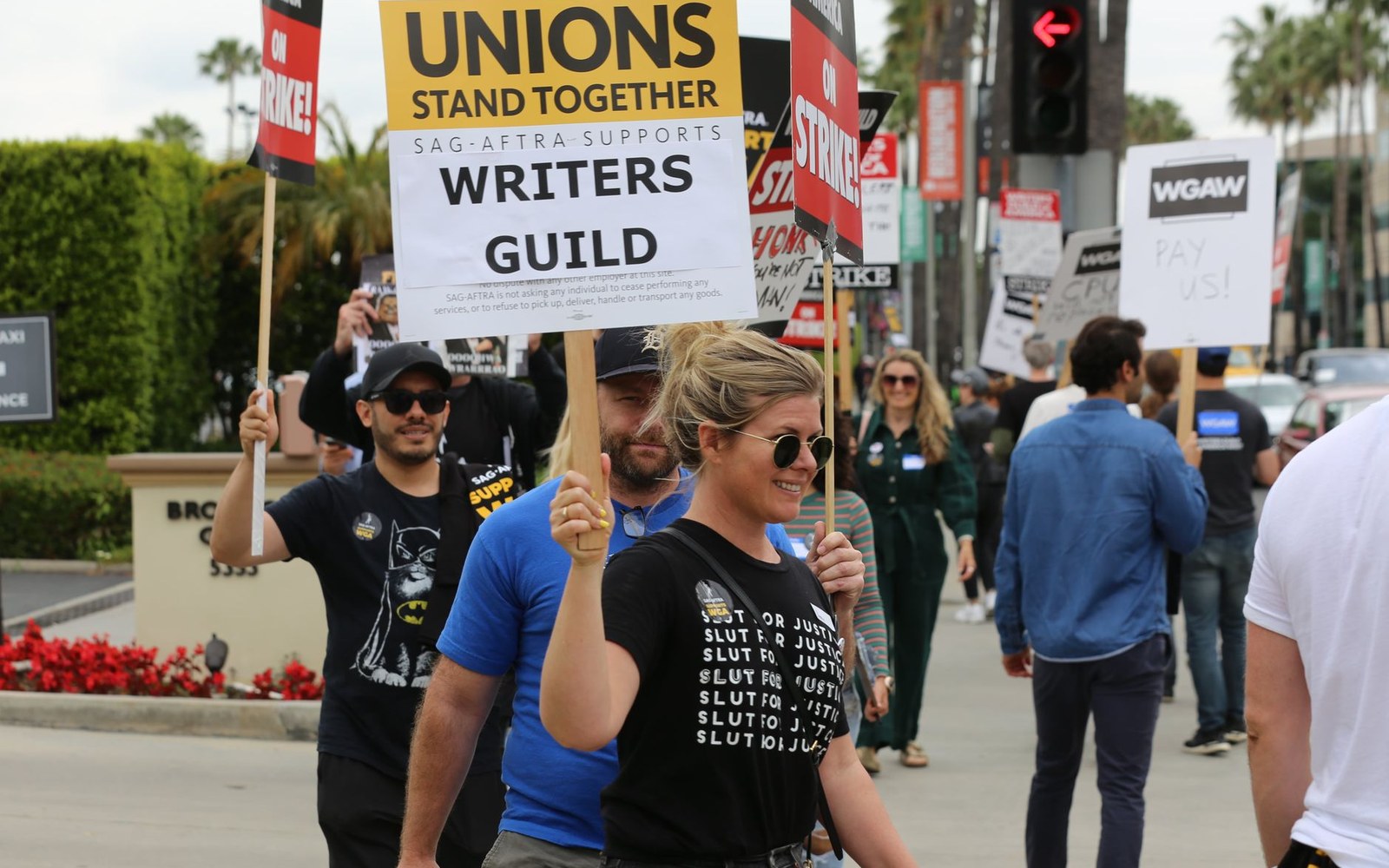
The WGA's 2007–08 strike, and the 2023 strikes by both SAG-AFTRA and the WGA, placed streaming residuals at the centre of both disputes. Netflix, Amazon, and the other streaming platforms had, in the view of the guilds, revived the old studio logic: engage talent per project, retain unlimited reuse rights, offer no share of downstream revenue. The guild model — the MBA, the franchise agreement, the residual — was the instrument the unions reached for because they had spent ninety years sharpening it.
The Citation in Contemporary Organising
Contemporary gig-economy organisers cite the guild model explicitly, and for good reason. Sara Horowitz, whose Freelancers Union drew directly on the entertainment-union precedent, has pointed to the MBA as evidence that sectoral minimum standards are achievable without reclassifying workers as employees. The Independent Workers' Union of Great Britain, operating in a very different legal environment, has argued similarly that statutory worker status — rather than full employee status — could underpin a floor of rights analogous to the MBA without triggering the classification battles that have consumed years of litigation in California and Brussels.
The distinction matters because the guild model bypasses the definitional question entirely. SAG-AFTRA does not argue that its members are employees. It argues that, whatever their classification, they deserve a negotiated floor — and that studios and platforms with sufficient market power can be made to sign one. Whether that argument transfers cleanly to food-delivery platforms or ride-hailing companies, where the barriers to collective action are higher and union density is minimal, remains genuinely contested. But the template is real, tested, and older than most of the legislation that gig-economy reformers are currently trying to pass.

The Authors Guild, founded in 1912 as the Authors League of America, was arguing about writers' rights long before anyone spoke of platforms. The specific vocabulary of platform work is recent. The underlying argument is not.
Elsewhere in Organising