Before Coworking, There Was the Serviced Office
The serviced office and the coworking space sell the same square metre at different prices by telling a different story about who is in the room.
From Brussels to Bankruptcy to Recovery
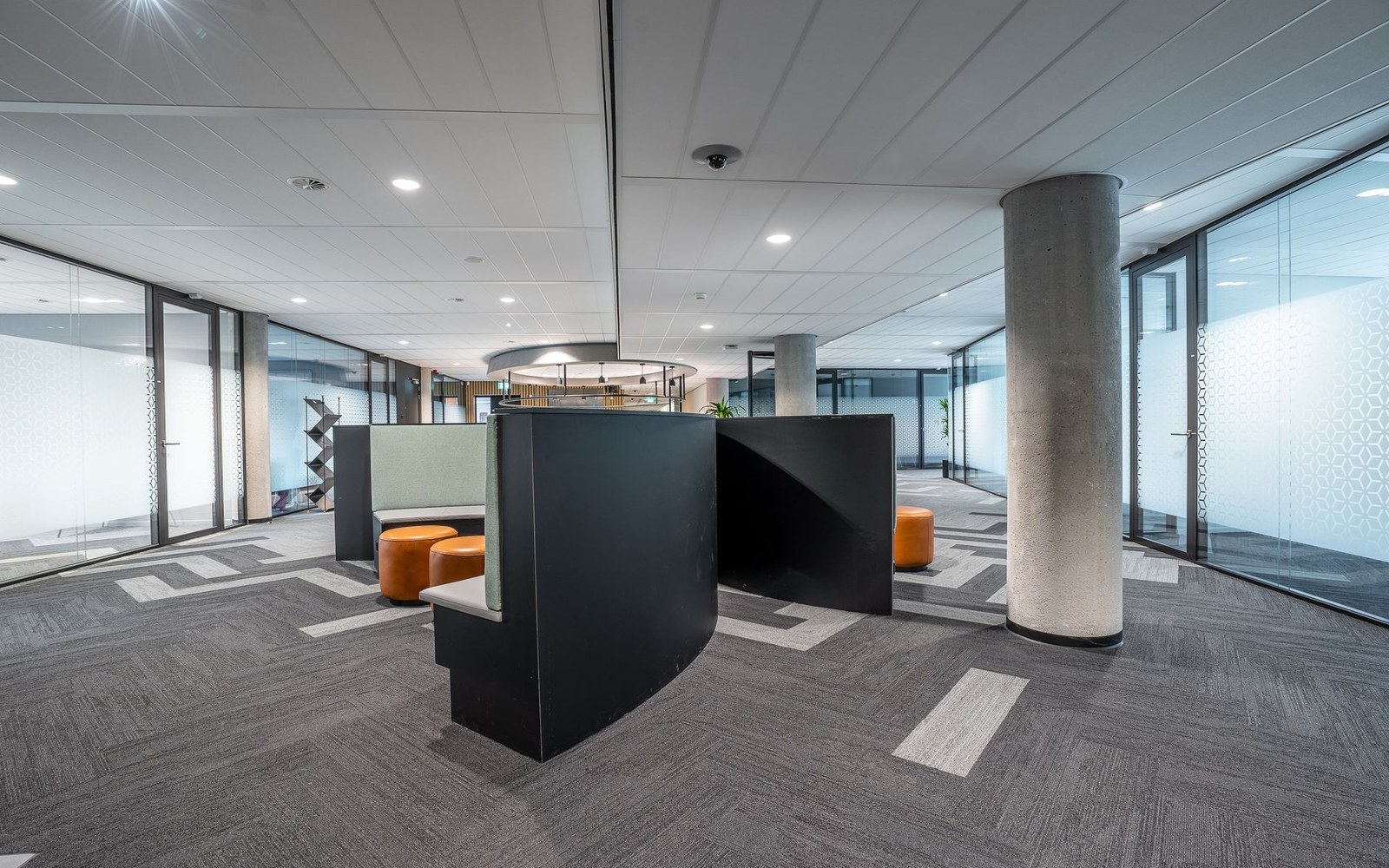
Regus was founded in Brussels in 1989 by Mark Dixon, an entrepreneur who had identified a gap that the conventional commercial lease market was failing to fill: businesses that needed professional space for weeks or months, not years. The model was straightforward — lease a floor, fit it out to a corporate standard, subdivide it into furnished offices, and charge a premium over raw rent in exchange for flexibility, a receptionist, and a mailing address. By the time Regus listed on the London Stock Exchange in 2000, it was operating across more than 60 countries and had become the dominant name in what the industry called serviced offices or business centres.
The timing was catastrophic. The dot-com collapse of 2001 wiped out swathes of the startup and technology tenants who had been filling Regus centres on short-term agreements. Occupancy fell sharply, and in 2003 the company's US subsidiary filed for Chapter 11 bankruptcy protection. The parent survived, restructured, and re-emerged — leaner, more cautious about lease commitments, and positioned for the gradual corporate acceptance of flexible working that accelerated through the following decade. By 2016, Regus had rebranded its parent holding company as IWG (International Workplace Group), a name capacious enough to absorb multiple sub-brands at different market positions: Regus for the corporate tier, Spaces for a deliberately trendier aesthetic aimed squarely at the coworking demographic.
The Same Square Metre, Different Story
When Brad Neuberg opened the San Francisco Coworking Space in August 2005, the concept he articulated was not primarily architectural. It was social — shared values, community, the deliberate mixing of independent workers who would otherwise be isolated at home. The language that spread through the coworking movement in the years that followed emphasised collaboration, serendipity, and belonging. What it carefully avoided emphasising was that the underlying product — a desk, a chair, a fast internet connection, and a postal address — was structurally identical to what Regus had been selling since the late 1980s.

The price differential was real but not the whole story. A private office in a Regus centre has typically cost more per square metre than an open-plan hot-desk in an independent coworking space, though WeWork, once it reached scale, charged rates in major cities that rivalled or exceeded Regus equivalents. The meaningful difference was marketing and membership composition. Regus positioned itself toward the corporate road warrior and the small business that wanted to project a conventional professional image. Coworking spaces, particularly independent ones in neighbourhoods like Shoreditch in London or the Mission in San Francisco, positioned themselves toward freelancers, designers, and early-stage founders — and charged for the implied network as much as the desk.
This distinction mattered commercially because it justified the price premium coworking spaces could charge to their target market, and it mattered legally because it shaped who occupied the space. The growth of platform-mediated freelance work through the 2010s — measured periodically by the BLS Contingent Worker Supplement — generated precisely the population of mobile, own-account workers that coworking operators needed to fill their memberships. Regus, by contrast, had built its model around companies paying for staff, not individuals paying for themselves.
IWG's acquisition strategy after 2016 acknowledged that the boundary between the two models was dissolving. The company acquired or launched brands designed to look and feel like the independent coworking spaces that had spent a decade marketing themselves as Regus's opposite. The consolidation confirmed what the economics had always suggested: flexible workspace is a real estate product, and the community narrative is a differentiation strategy. Regus understood the product first. The coworking movement understood, and monetised, the story.
The legacy is a market in which the original serviced-office operator and its imitators coexist with hundreds of independent spaces, all selling versions of the same physical amenity while competing on the identity they offer their members — corporate utility on one side, creative belonging on the other. The square metre is the same. The story costs extra.
Elsewhere in Coworking