The Valuation That Required a Different Definition of Real Estate
WeWork invented a metric to justify its price, and the market took eighteen months to stop believing it

WeWork was incorporated in New York in 2010 by Adam Neumann and Miguel McKelvey, who had been operating a co-working floor called Green Desk in Brooklyn since 2008. The company's core business was straightforward: sign long-term leases on commercial property, subdivide the space, and re-let it to members on flexible, short-term agreements, capturing the spread. What was not straightforward was the valuation the company eventually claimed for itself — and the intellectual scaffolding its founders built to support it.
By January 2019, SoftBank had invested across multiple rounds at a combined implied valuation of $47 billion, making WeWork one of the most valuable private companies in the world. The figure was cited in financial press throughout that year as a settled fact. It was not a settled fact. It was a bet on a definition.
The S-1 and the metric that stopped the market
WeWork filed its S-1 registration statement with the US Securities and Exchange Commission on 14 August 2019. The document ran to hundreds of pages and disclosed, for the first time in consolidated form, the scale of the company's losses: a net loss of $1.9 billion in 2018 on revenue of $1.8 billion. The company was spending roughly two dollars for every dollar it collected. Across the first six months of 2019 alone, it lost an additional $904 million.
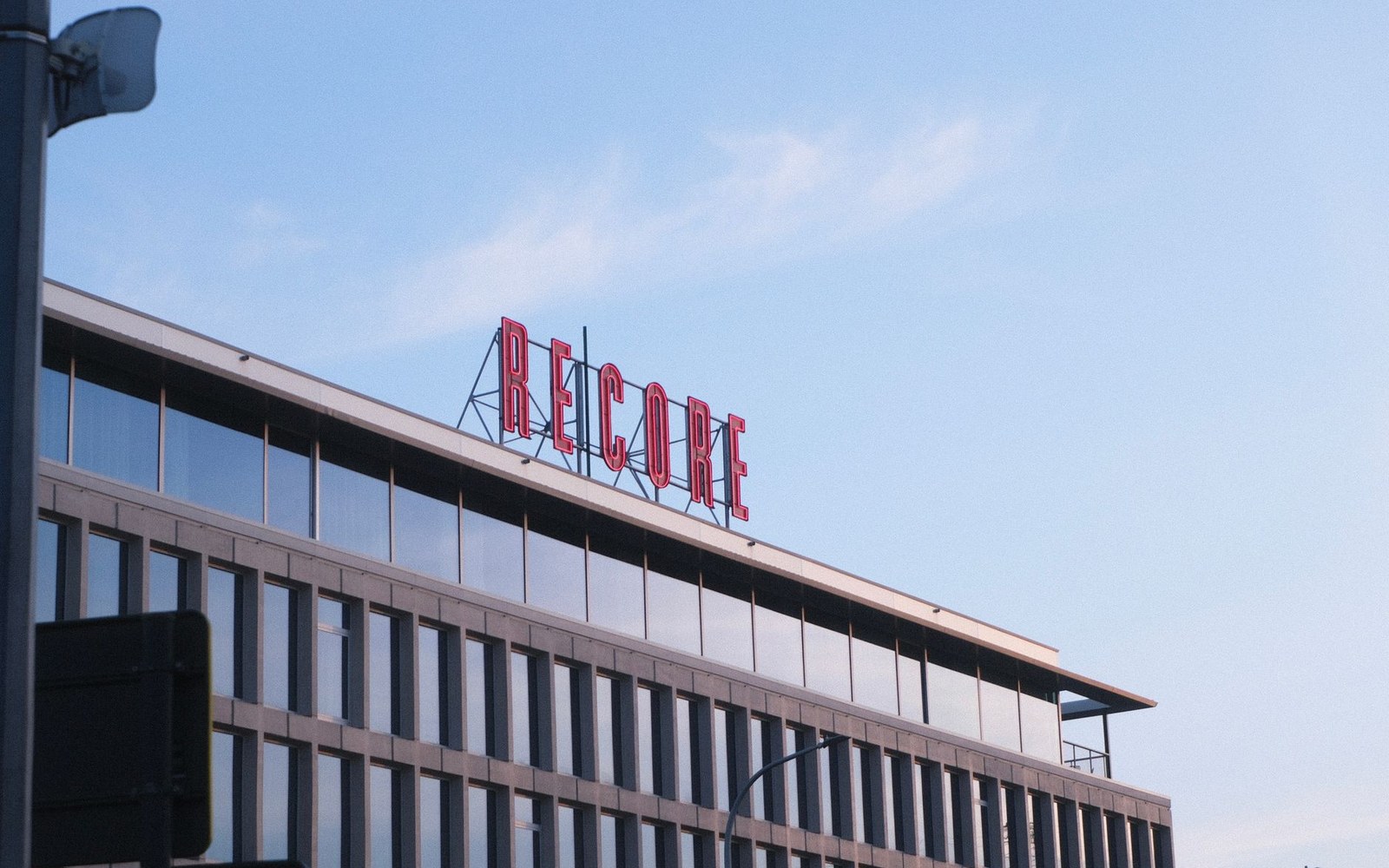
The S-1 also introduced, at length, a metric called community-adjusted EBITDA. Standard EBITDA — earnings before interest, taxes, depreciation, and amortisation — is itself a non-GAAP measure, but a familiar one. Community-adjusted EBITDA went further, stripping out not only those items but also sales and marketing costs, general and administrative expenses, and development and design expenditures. Under this metric, WeWork showed a positive figure. Under every standard accounting measure, it showed catastrophic losses. The SEC's Division of Corporation Finance sent comment letters to WeWork almost immediately after the filing, questioning the company's use of this metric and the adequacy of its disclosures.
The S-1 also contained language that positioned WeWork not as a real-estate operator but as a technology company — a distinction with enormous valuation consequences, since technology companies in 2019 were being valued on revenue multiples many times higher than property companies. The prospectus described WeWork's mission as "elevating the world's consciousness" and referred to the company as a "global physical social network." Analysts at major banks publicly noted the tension between this language and the underlying business model, which remained, at its foundation, a lease arbitrage operation exposed to commercial property cycles.
The withdrawal and what followed
Adam Neumann stepped down as chief executive on 24 September 2019. The IPO was formally withdrawn on 30 September 2019. The company's internal valuation, which had been set as high as $47 billion by SoftBank's earlier investment rounds, fell to an estimated $8 billion by October 2019 when SoftBank mounted a rescue package that gave it majority control. Within weeks of the S-1's publication, more than 2,400 employees were laid off, approximately a fifth of the workforce at the time.

The SEC continued its investigation. The Commission brought no securities charges against Neumann relating to the IPO withdrawal itself — an outcome that drew comment from legal observers — but the investigation into the company's disclosures and the conduct of its major shareholder SoftBank remained a reference point in academic and regulatory discussions of late-stage private valuations through the mid-2020s.
WeWork filed for Chapter 11 bankruptcy protection on 6 November 2023 in the United States Bankruptcy Court for the District of New Jersey. By that point the company had renegotiated or exited hundreds of its leases following the pandemic, which had gutted demand for shared office space in every major market and exposed the core structural risk of its business model: long obligations on one side of the ledger, short commitments on the other. The bankruptcy filing listed liabilities of approximately $18.65 billion.
What the story actually documents
The WeWork episode is frequently narrated as a story about a charismatic founder and credulous investors. In the context of coworking and independent work more broadly, it is something more specific: a stress test of the proposition that flexible, membership-based office space could bear technology-company valuations because its supply of desks was also, somehow, a platform.

The coworking sector itself predates WeWork and continued after it. Brad Neuberg's San Francisco Coworking Space, opened in August 2005, operated on a community model with no particular ambition toward scale. Regus, which had been operating serviced offices since 1989 out of Brussels, had already demonstrated one sustainable version of the lease-arbitrage model — and had itself gone through a bankruptcy in 2003 after overexpansion, providing a precedent that investors in WeWork evidently did not weight heavily.
What WeWork added to the existing serviced-office model was not a fundamentally new product but a new story, one calibrated to the moment when private capital was abundant, interest rates were near historic lows, and the category of "gig worker" or "independent professional" was being cited in reports by the McKinsey Global Institute, the Freelancers Union, and the Bureau of Labor Statistics as an expanding share of the workforce. The demand thesis — that a growing population of flexible workers would require a growing supply of flexible space — was not wrong. The valuation built on top of that thesis was another matter.
The S-1's community-adjusted EBITDA is now cited in business school curricula and SEC guidance on non-GAAP financial measures as a worked example of how bespoke metrics can obscure rather than illuminate a company's position. WeWork's story is, among other things, a document in the history of how independent work was counted and valued — and what happened when a real-estate company decided it could be valued as the infrastructure of a new economy rather than as a tenant of the old one.
Elsewhere in Coworking